Kerala has the highest prevalence of chronic disease among its elderly population of any state in India, with over half of seniors managing at least one condition well above the national average. Nationally, hypertension affects roughly 27% of older Indians, followed by diabetes and arthritis, and these numbers climb sharply after age 60.
If you’re caring for a parent or grandparent, chances are you’re already navigating at least one of these conditions or will be soon. Understanding what each condition involves, and what can realistically be managed day-to-day, is the first step. Later in this article, we’ll cover how the basics of Parent Home Care Service come together to support these conditions long-term.
Here are the most common chronic conditions affecting older adults, and what you should know about each.
1. High Blood Pressure (Hypertension)
Hypertension is the single most common chronic condition among older adults, affecting nearly 1 in 4 Indians over 45, with prevalence rising further after 60. It often has no obvious symptoms, which is exactly why it’s called a “silent” condition; many seniors don’t know they have it until it causes a stroke or heart complication.
Steps to manage it:
- Maintain a low-salt, heart-healthy diet
- Monitor blood pressure regularly, not just during doctor visits
- Manage stress and ensure adequate sleep
- Stay physically active within safe limits
2. Diabetes
Diabetes affects a significant share of older Indians, and the risk increases sharply with age. Poorly managed diabetes can lead to complications involving the heart, kidneys, and eyes, making consistent monitoring essential.
Steps to manage it:
- Regular blood sugar monitoring
- Consistent meal timing built around a nutrition plan suited to the condition
- Foot care to prevent complications
- Careful medication and insulin management
Diet plays an outsized role in diabetes control, specifically if you haven’t already; it’s worth reading up on eating well in the senior years, since small, consistent dietary changes often matter more than any single medication adjustment.
3. Arthritis and Joint Pain
Bone and joint disease is among the most reported chronic conditions in older Indians, and is significantly more common in women than men. It causes pain, stiffness, and reduced mobility, which increases fall risk if left unmanaged.
Steps to manage it:
- Gentle, regular movement and stretching
- Weight management to reduce joint load
- Assistive devices where needed
- Pain management as advised by a doctor
4. Heart Disease
Cardiovascular disease becomes markedly more common with age, and prevalence roughly doubles between the 45, 49 and 75+ age groups. Fatigue, breathlessness, and swelling are common early warning signs that are often dismissed as “normal ageing.”
Steps to manage it:
- Heart-healthy diet low in saturated fat and salt
- Regular, doctor-approved physical activity
- Consistent medication adherence
- Monitoring for warning signs like breathlessness or chest discomfort
5. Chronic Respiratory Conditions (COPD, Asthma)
Chronic lung disease is common enough in India’s ageing population to be tracked as one of the top conditions in national ageing surveys. Breathlessness, chronic cough, and fatigue with minimal exertion are typical symptoms.
Steps to manage it:
- Avoiding smoke, dust, and known triggers
- Prescribed inhaler or medication routines
- Breathing exercises
- Prompt treatment of respiratory infections
6. Dementia and Cognitive Decline
Cognitive decline is an increasingly significant concern in India’s ageing population, with rising cases of memory-related conditions among adults over 65. It affects memory, decision-making, and eventually the ability to safely manage daily tasks.
Steps to manage it:
- Structured daily routines
- Cognitive engagement activities
- A safe, hazard-free home environment
- Consistency in caregivers and surroundings
7. Depression and Mental Health Conditions
Mental health in older adults is under discussed but common, particularly among those living alone or recently widowed. Persistent sadness, withdrawal from activities, and appetite changes are key signs and this is not simply “a normal part of ageing.”
Steps to manage it:
- Regular social interaction
- Staying physically and mentally active
- Open conversations about mood and wellbeing
- Professional support when needed
8. Obesity and Related Metabolic Conditions
Excess weight in older adults compounds the risk of diabetes, heart disease, and joint problems, making weight management a foundational part of managing several chronic conditions at once.
Steps to manage it:
- Gradual, sustainable dietary changes
- Regular, appropriate physical activity
- Coordinated care across all related conditions
- Nutrition guidance suited to age and mobility
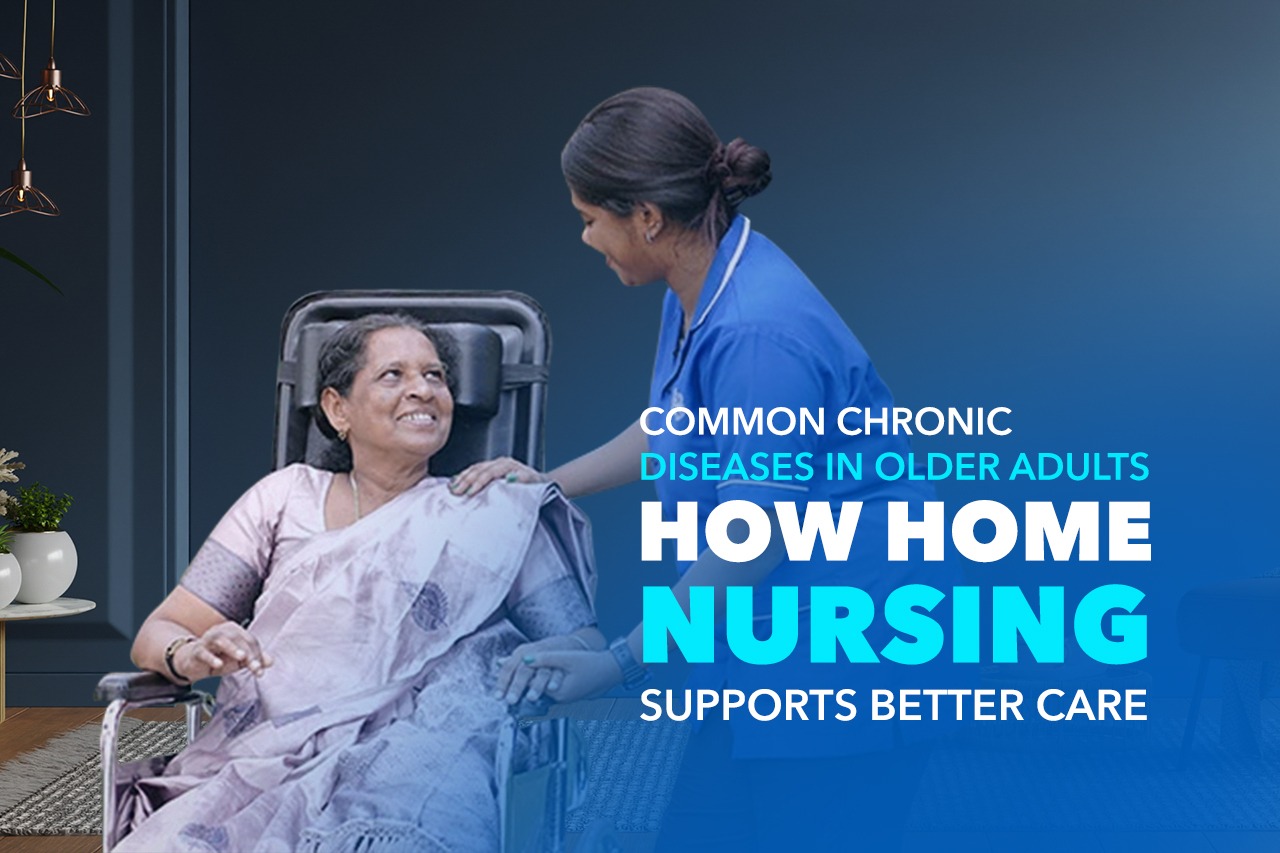
How Home Nursing Supports Better Care
Knowing how to manage a chronic condition and managing it consistently, every day, are two different things, especially once a senior is dealing with two or three of the conditions above at once, which is common rather than the exception. This is where trained home nursing makes a measurable difference:
- Daily monitoring catches warning signs, such as a blood pressure spike, an irregular sugar reading before they turn into emergencies.
- Medication management ensures the right doses at the right times, one of the most common gaps in family-led care.
- Continuity of care matters most for conditions like dementia, where a familiar, consistent caregiver reduces confusion and agitation.
- Coordinated care across multiple conditions means diet, medication, and activity are managed as one plan instead of several disconnected ones.
This is also the core reason why more Kerala families are choosing care at home over repeated hospital visits. A well-managed routine often prevents the readmissions that come from gaps between visits.
This is exactly the kind of care Caremark provides: trained home nurses managing day-to-day monitoring, medication, and coordination, so chronic conditions are handled proactively, not reactively.
Final Thoughts
Living with chronic conditions doesn’t mean you have to sacrifice comfort or quality of life. By monitoring health regularly, managing medication properly, and receiving compassionate support, older adults can live safely and independently at home. Choosing the best home nursing services in Kochi ensures that your loved ones get professional, personalized care. This gives families the confidence and peace of mind they need.
Sources
- Jana, A., Chattopadhyay, A. Prevalence and potential determinants of chronic disease among elderly in India: Rural-urban perspectives. PLOS ONE, 2022. https://pmc.ncbi.nlm.nih.gov/articles/PMC8916671/
- Bhatia, M., et al. Gender and Age Differentials in Prevalence and Pattern of Nine Chronic Diseases Among Older Adults in India. Journal of Clinical Hypertension, 2025 (based on LASI data). https://onlinelibrary.wiley.com/doi/10.1111/jch.70069
- Longitudinal Ageing Study in India (LASI), Wave 1, Ministry of Health & Family Welfare, Government of India.
- Annals of Geriatric Education and Medical Sciences, 2025 — geriatric health burden in India.