A hospital admission can change everything overnight. One day life is normal, and the next, someone is sleeping in a plastic chair beside a hospital bed, tracking medicine timings, following up on lab reports, and trying to manage work at the same time.
In Kerala, where hospitals often expect a bystander to remain with the patient for non-clinical support, this can become a real logistical and emotional strain for families, especially when relatives live in different cities, work full-time, or cannot manage overnight hospital stays.
This is exactly the gap that professional hospital bystander services are designed to fill.
What Is a Hospital Bystander Service?
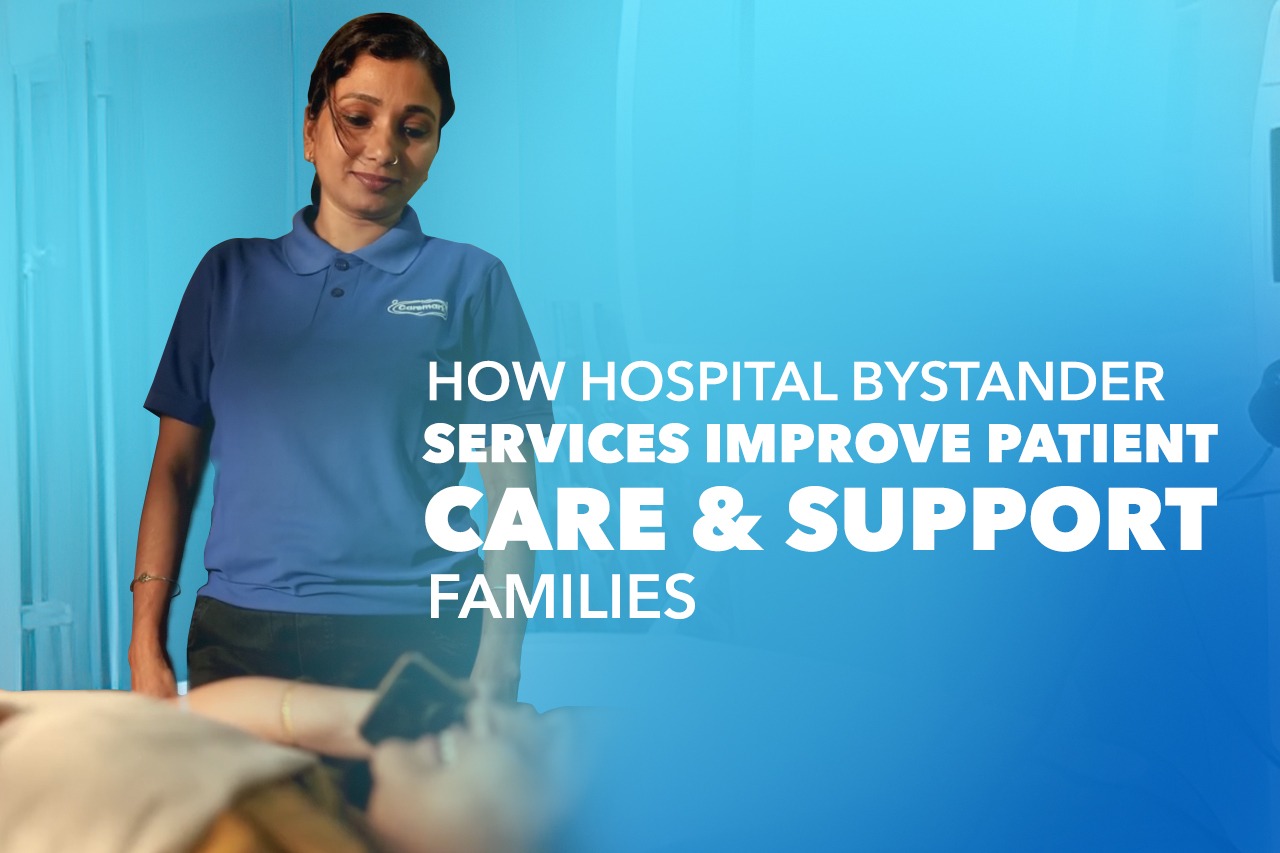
A hospital bystander is a trained care attendant who stays with the patient during their hospital stay and provides non-medical support. Their responsibilities can include helping with feeding and mobility, assisting with personal needs, monitoring basic vitals as directed, informing nursing staff about changes, and supporting admission and discharge procedures.
They work alongside the clinical team, not as a replacement for doctors or nurses.
How Bystander Services Improve Patient Care
A dedicated bystander can provide continuous attention that busy hospital staff may not always be able to provide.
They can help patients with daily activities, reduce the risk of falls, support feeding and mobility, and promptly communicate discomfort or changes in the patient’s condition to the nursing team.
For elderly, post-operative, or mobility-limited patients, having someone consistently available can also provide reassurance and emotional comfort during an unfamiliar hospital stay.
The bystander’s role is particularly valuable because they can focus on the patient’s day-to-day needs while doctors and nurses concentrate on clinical treatment.
How Bystander Services Support Families
Hospitalization can place significant pressure on family members. Relatives may need to manage work, children, travel, accommodation, and medical decisions while also staying beside the patient.
Professional bystander support allows families to take necessary breaks without leaving the patient unattended.
It can be especially helpful for families living outside Kerala or abroad. Instead of travelling immediately or depending on relatives to provide continuous support, families can arrange a trained attendant to stay with their loved one.
This allows family members to focus more on important treatment decisions while the routine care and companionship are handled by the bystander.
Who Typically Needs Hospital Bystander Support?
Hospital bystander services can be useful for:
- Elderly patients
- Post-surgical and post-operative patients
- Stroke and neurological recovery patients
- Cancer patients undergoing extended treatment
- ICU step-down and long-term hospitalization cases
- Patients with limited mobility or cognitive difficulties
- Patients whose family members cannot stay full-time
What to Look for in a Bystander Service
Choosing the right provider is important because the attendant will spend considerable time with the patient.
Look for a service that provides trained and background-verified attendants, clear hygiene and privacy practices, and proper communication with the hospital’s clinical team.
It is also useful to check whether the provider offers flexible coverage such as hourly, overnight, or 24/7 support. Transparent pricing, responsive coordination, and the ability to arrange replacements when required can make the service more reliable.
If the patient requires continued assistance after discharge, choosing a provider that also offers home care can make the transition from hospital to home smoother.
Final Thoughts
Hospitalization can be challenging for both patients and their families. Professional hospital bystander services provide practical, continuous non-medical support that can make the hospital experience more manageable.
For elderly patients, post-operative patients, or anyone who needs assistance with everyday activities during hospitalization, a trained bystander can provide companionship, support, and timely communication with the hospital team.
For families, it can provide something equally important: peace of mind that their loved one is not alone when they cannot be there themselves.